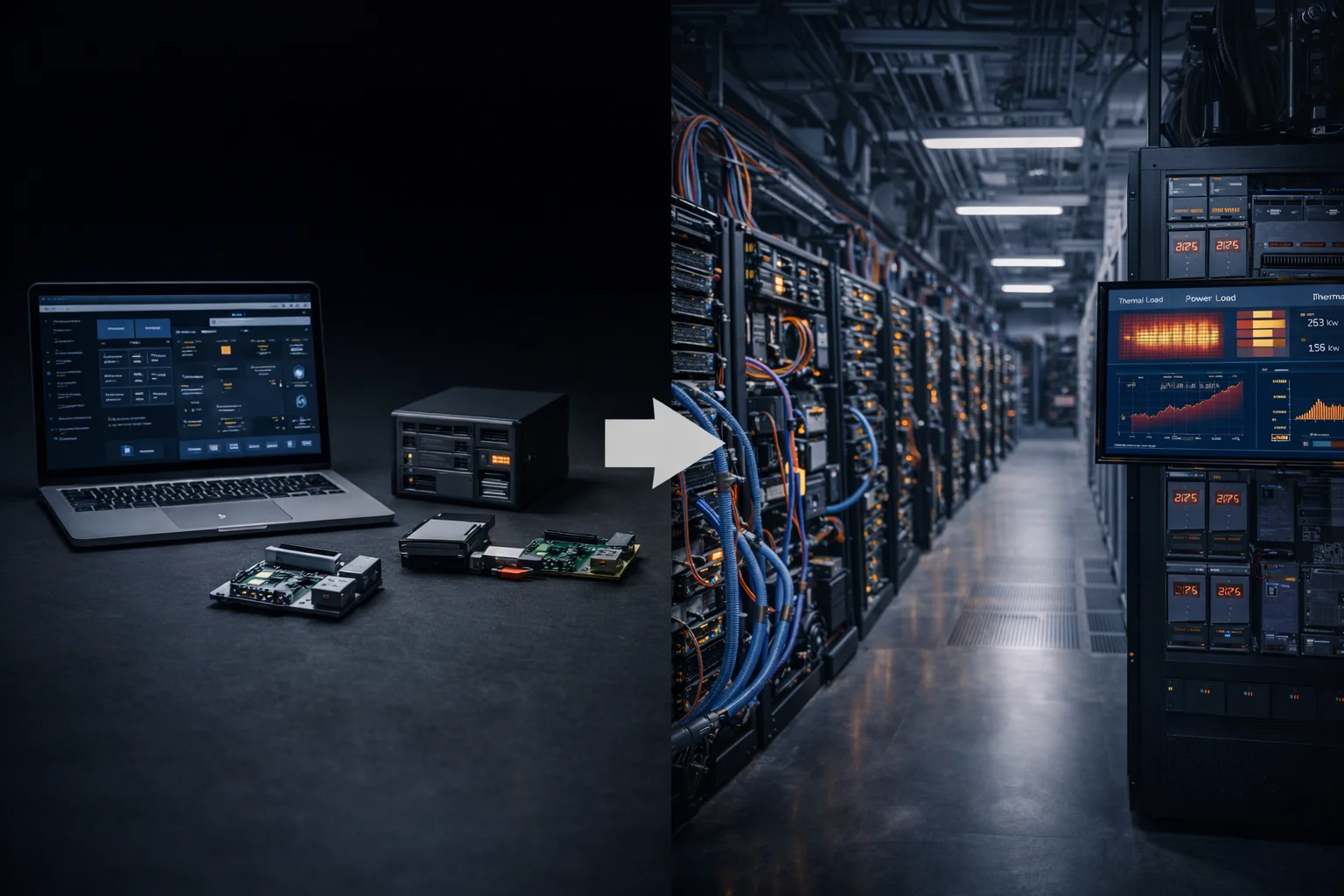
AI Is Re-Centralizing Computing After 30 Years of Distribution
Introduction
The enterprise computing landscape is witnessing a fundamental architectural shift that reverses three decades of distributed systems evolution. While the industry spent years moving from mainframes to client-server architectures, then to distributed microservices and edge computing, AI workloads are now driving a return to centralized infrastructure patterns. This shift represents more than a technological preference—it reflects the computational realities of modern AI systems that demand massive, coordinated processing power in ways that distributed architectures struggle to deliver efficiently.
This re-centralization affects how enterprises design data centers, allocate computing resources, and structure their technology investments. Understanding why AI infrastructure centralization is occurring, and what it means for existing distributed systems, is essential for technical leaders planning their organization's computing future.
Background
The movement toward distributed computing began in earnest during the 1990s as organizations sought alternatives to expensive, monolithic mainframe systems. Client-server architectures offered cost advantages and operational flexibility. The 2000s brought service-oriented architectures, followed by the microservices revolution of the 2010s, which promised scalability, fault tolerance, and development agility through system decomposition.
Edge computing emerged as the latest evolution of this distributed philosophy, pushing computation closer to data sources and users to reduce latency and bandwidth costs. Content delivery networks, IoT processing, and mobile applications all benefited from distributing workloads across geographically dispersed infrastructure.
However, AI workload design operates under fundamentally different constraints than traditional distributed applications. Where conventional systems benefit from loose coupling and independent scaling, AI systems often require tight integration between compute resources, shared memory architectures, and coordinated processing across thousands of specialized chips.
The computational demands of large language models, computer vision systems, and deep learning training create requirements that challenge the core assumptions of distributed architecture. Training a model like GPT-4 requires coordinating thousands of GPUs working on tightly coupled matrix operations, where network latency between compute nodes directly impacts training efficiency and model convergence.
Key Findings
Compute Architecture Demands Drive Centralization
Modern AI infrastructure centralization stems from the specific requirements of neural network operations. Training large models requires frequent synchronization of gradient updates across compute nodes, making network latency between processors a critical performance bottleneck. In distributed architectures, the time spent communicating between distant nodes often exceeds the time spent on actual computation, fundamentally limiting training throughput.
Meta's research infrastructure exemplifies this constraint. The company's AI Research SuperCluster uses high-speed InfiniBand networking to connect 6,080 V100 GPUs within a single data center facility. The architecture prioritizes extremely low-latency communication between compute nodes over geographic distribution, achieving the interconnect speeds necessary for efficient large-scale training.
Google's TPU v4 pods demonstrate similar centralization principles. Each pod contains 4,096 TPU v4 chips connected through a custom 3D torus network topology that enables any chip to communicate with any other chip in at most four network hops. This level of interconnectivity is only feasible within a controlled, centralized environment where Google can optimize both hardware placement and network topology.
Memory and Storage Requirements Favor Consolidation
AI systems consume memory and storage at scales that distributed architectures handle inefficiently. Large language models require hundreds of gigabytes to terabytes of model weights to remain accessible during inference, while training datasets often exceed petabyte scales. Distributing these resources across multiple locations introduces data consistency challenges and transfer bottlenecks that degrade performance.
NVIDIA's DGX SuperPOD systems address these constraints through centralized, high-bandwidth storage architectures. A single SuperPOD can include up to 2.4 petabytes of NVMe storage connected through 200Gb/s InfiniBand networks, enabling rapid data access across the entire compute cluster. Attempting to replicate this storage performance across distributed locations would require network bandwidth that exceeds the capacity of most wide-area connections.
Enterprise AI systems face similar consolidation pressures. Companies training custom models find that distributed training across multiple data centers introduces synchronization overhead that can increase training time by 300-500% compared to centralized approaches. The result is that organizations are investing in fewer, larger AI-focused data centers rather than distributing AI capabilities across existing infrastructure.
Energy and Cooling Constraints Reinforce Centralization
The power density of AI workloads creates operational requirements that favor centralized facilities designed specifically for high-energy computing. Modern GPU clusters can consume 40-80 kilowatts per rack, compared to 5-15 kilowatts for traditional server workloads. This power density requires specialized cooling infrastructure, electrical distribution systems, and backup power that is economically viable only at substantial scale.
Microsoft's AI-focused data centers illustrate how energy requirements drive facility design. The company has developed specialized cooling systems using liquid cooling for AI clusters, with some facilities consuming over 100 megawatts of power primarily for AI training and inference workloads. Distributing this power and cooling capability across multiple smaller facilities would significantly increase both capital and operational costs.
The cooling requirements also create geographic constraints. Data centers optimized for AI workloads increasingly locate in regions with favorable climate conditions, abundant renewable energy, and proximity to high-capacity electrical grids. This geographic clustering further reinforces centralization trends as organizations consolidate AI infrastructure in locations that can support the operational requirements efficiently.
Network Topology Limitations in Distributed Systems
AI workload communication patterns expose fundamental limitations in how distributed systems handle collective communication operations. While traditional distributed applications primarily use point-to-point communication, AI training relies heavily on all-reduce operations where every compute node must exchange data with every other node simultaneously.
These collective communication patterns perform poorly across wide-area networks with variable latency and limited bandwidth. Amazon's experience with distributed machine learning demonstrates this constraint: the company found that distributed training across multiple AWS regions resulted in communication overhead that consumed 60-80% of available training time, making the approach impractical for production workloads.
Modern data center architecture has evolved to support these communication requirements through specialized network topologies. Fat-tree and dragonfly network designs provide the uniform, high-bandwidth connectivity that AI workloads require, but these topologies are only economically feasible within centralized facilities where network administrators can control the entire communication path.
Cost Economics Favor Concentration
The economics of AI infrastructure strongly favor centralized deployment models. Specialized AI hardware achieves optimal price-performance ratios only when operated at high utilization rates, which is easier to achieve through centralized resource pooling than distributed allocation.
Tesla's Dojo system represents this economic logic taken to its conclusion. Rather than distributing AI training across multiple facilities, Tesla has invested in custom silicon and centralized infrastructure designed specifically for computer vision training workloads. This approach allows the company to optimize every component of the system—from chip design to cooling systems—for maximum efficiency in AI training tasks.
The operational costs also favor centralization. Managing distributed AI infrastructure requires specialized expertise at multiple locations, while centralized approaches allow organizations to concentrate their AI operations expertise in fewer facilities. This reduces staffing costs and improves operational efficiency through expertise consolidation.
Implications
Enterprise Data Center Strategy Must Adapt
Organizations building AI capabilities face strategic decisions about whether to retrofit existing distributed infrastructure or invest in centralized AI-optimized facilities. The performance and cost advantages of centralized AI infrastructure mean that enterprises serious about AI adoption will likely need to reconsider their data center strategies.
Financial services firms provide an illustrative example. JPMorgan Chase has invested in centralized AI infrastructure for fraud detection and algorithmic trading, finding that distributed approaches could not deliver the low-latency inference required for real-time transaction processing. The bank's centralized AI systems process millions of transactions per second with sub-millisecond response times that would be impossible to achieve across distributed infrastructure.
Hybrid Architectures Emerge as Compromise Solutions
While AI workloads drive centralization, enterprises still require distributed capabilities for traditional applications, regulatory compliance, and business continuity. This creates demand for hybrid architectures that combine centralized AI processing with distributed systems for other workloads.
Many organizations are implementing hub-and-spoke models where centralized data centers handle AI training and complex inference tasks, while edge locations perform simpler AI inference and traditional application processing. This approach allows enterprises to optimize infrastructure for different workload types while maintaining operational flexibility.
Skills and Operational Models Must Evolve
The shift toward centralized AI infrastructure requires different operational expertise than distributed systems management. Organizations need specialists in high-performance computing, GPU cluster management, and AI-specific networking protocols. This represents a significant change from the generalist system administration skills that distributed architectures have traditionally required.
The operational complexity of centralized AI systems also demands more sophisticated monitoring, resource allocation, and failure recovery procedures. Unlike distributed systems where individual node failures have limited impact, centralized AI infrastructure requires comprehensive redundancy and rapid failure detection to maintain system availability.
Vendor and Cloud Strategy Implications
The re-centralization trend affects how enterprises evaluate cloud providers and technology vendors. Organizations must assess providers based on their ability to deliver centralized AI infrastructure rather than just distributed computing capabilities.
Amazon Web Services, Microsoft Azure, and Google Cloud Platform have all invested heavily in AI-optimized regions with specialized hardware and networking. However, the centralized nature of these offerings means that enterprises have fewer geographic options for AI workloads compared to traditional cloud services, potentially affecting data sovereignty and regulatory compliance strategies.
Considerations
Geographic and Regulatory Constraints
While AI workloads favor centralization for performance reasons, regulatory requirements often mandate data locality and geographic distribution. European organizations subject to GDPR, Chinese companies operating under data localization laws, and financial institutions with regulatory oversight may find that compliance requirements conflict with AI infrastructure centralization benefits.
Organizations operating under these constraints must balance AI performance optimization with regulatory compliance, often resulting in multiple centralized AI facilities rather than a single global center. This approach maintains the performance benefits of centralization while addressing regulatory requirements through regional consolidation.
Vendor Lock-in and Ecosystem Dependencies
Centralized AI infrastructure often requires deeper integration with specific vendors' hardware and software ecosystems than distributed approaches. NVIDIA's CUDA ecosystem, Google's TPU architecture, and specialized networking solutions create dependencies that can limit future flexibility.
Organizations must evaluate whether the performance benefits of highly integrated, centralized AI systems justify the potential limitations in vendor flexibility and technology evolution. The rapid pace of AI hardware development means that infrastructure decisions made today may require significant reinvestment within three to five years.
Business Continuity and Risk Management
Centralized AI infrastructure concentrates both computational capability and operational risk in fewer locations. While this can improve operational efficiency and reduce complexity, it also creates single points of failure that can impact entire AI-dependent business processes.
Financial institutions using centralized AI for real-time trading decisions, healthcare organizations relying on centralized AI for diagnostic support, and autonomous vehicle companies processing sensor data through centralized systems must implement robust redundancy and disaster recovery procedures to manage the risks of centralization.
Cost Optimization Challenges
While centralized AI infrastructure can achieve better price-performance ratios than distributed approaches, it also requires significant upfront capital investment and may result in lower overall utilization rates for non-AI workloads. Organizations must carefully model the total cost of ownership for centralized versus distributed AI deployments.
The economies of scale in centralized AI infrastructure favor larger organizations that can efficiently utilize high-performance systems. Smaller enterprises may find that the minimum viable scale for centralized AI infrastructure exceeds their computational requirements, making distributed or cloud-based approaches more economically attractive.
Key Takeaways
• AI workload characteristics fundamentally favor centralized architectures due to requirements for low-latency communication, shared memory access, and coordinated processing that distributed systems cannot efficiently support.
• Modern AI infrastructure centralization is driven by technical constraints, not architectural preferences, including the need for specialized cooling, high-density power distribution, and custom networking topologies optimized for collective communication patterns.
• Enterprise data center strategies must evolve to accommodate hybrid models that combine centralized AI processing capabilities with distributed infrastructure for traditional applications, regulatory compliance, and business continuity requirements.
• The economics of AI infrastructure strongly favor concentration through improved utilization rates, operational efficiency gains, and the ability to optimize entire technology stacks for AI-specific workloads rather than general-purpose computing.
• Organizations face significant strategic decisions about AI infrastructure investment that will affect their competitive capabilities, operational flexibility, and technology vendor relationships for years to come.
• Skills and operational expertise requirements are shifting toward high-performance computing specialization as AI infrastructure demands different management approaches than traditional distributed systems administration.
• Regulatory and risk management considerations create tensions with centralization trends that enterprises must address through careful planning of geographic distribution, vendor relationships, and business continuity procedures.